The distinction between the European and American bakery models is not merely about recipes; it is a matter of Urban Sociology and Ingredient Philosophy.
The “Third Place” and Urban Sociology
In American urban planning, the bakery is often relegated to a “pit stop”—a drive-thru window or a plastic-wrapped shelf in a fluorescent-lit supermarket. Conversely, the European model treats the bakery as a “Third Place.” Coined by sociologist Ray Oldenburg, this term refers to social surroundings separate from the two usual social environments of home (“first place”) and the office (“second place”).
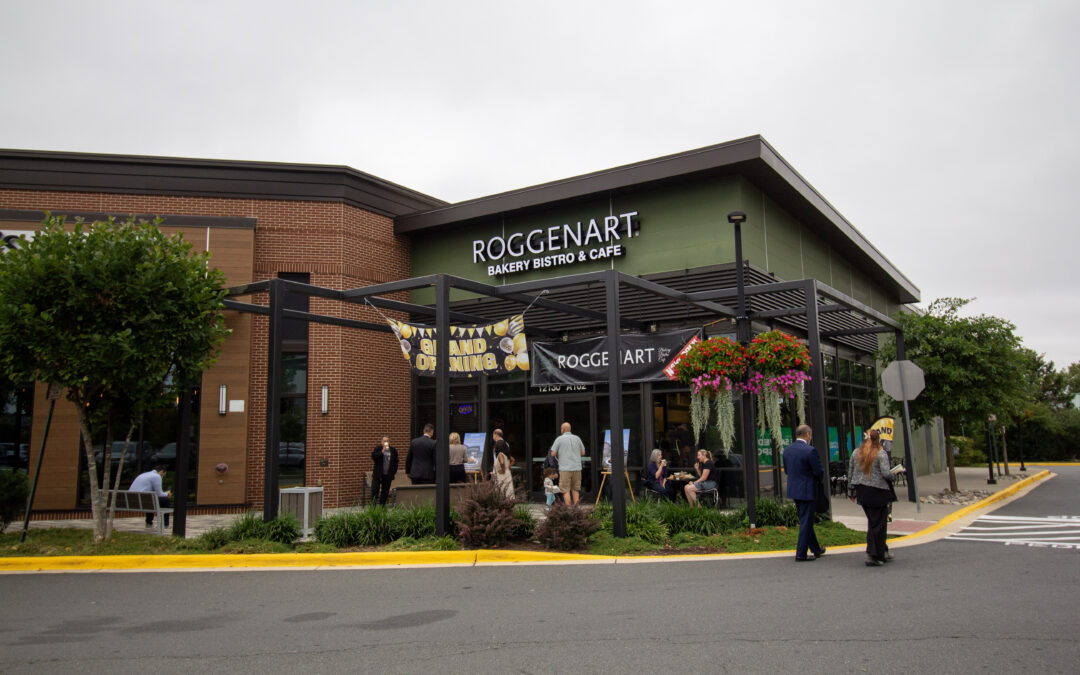
At Roggenart, we have meticulously recreated this European “Third Place” at our locations in Columbia, Savage, and Mount Vernon. Unlike American chains designed for high turnover, our cafes are designed for lingering. By providing a space that encourages intellectual exchange—much like the coffee houses of 19th-century Vienna—we offer a sanctuary from the frantic pace of American “hustle culture.”
The Biochemistry of the Crust: Maillard vs. Sugar
The American palate has been conditioned by industrial baking to equate “freshness” with “softness.” This is achieved through high sugar content and dough conditioners like Azodicarbonamide. However, the European tradition—and the Roggenart standard—prizes the Maillard Reaction.
This chemical reaction between amino acids and reducing sugars gives our bread its signature dark, crackling crust and complex, nutty flavor. While an American “sandwich loaf” relies on high-fructose corn syrup for browning, a Roggenart loaf relies on long-term cold fermentation. This process breaks down complex starches into simple sugars naturally, making our bread more digestible (lower glycemic index) and richer in micronutrients like B-vitamins and magnesium (NCBI, 2023).
Ingredient Integrity: The “Clean Label” Standard
There is a stark contrast in the regulatory environment of ingredients. Many additives common in American commercial bakeries—such as Potassium Bromate (a flour bleaching agent)—are strictly banned in the European Union due to health concerns.
Roggenart operates on a “Clean Label” philosophy. We source high-protein flours and European-style butter with an 82% butterfat content (compared to the 80% standard in the US). This extra 2% is the secret to the structural integrity of our pastries. When you choose Roggenart, you aren’t just buying a meal; you are opting out of the industrial food complex and into a tradition of purity.
Why Roggenart is the Premier Choice
Choosing a bakery is an act of self-care and community support. When you step into a Roggenart, you are experiencing:
- Artisanal Precision: Our bakers are trained in the specific “Roggen-Art” (The Art of Rye), a technique that requires years to master.
- Health-Conscious Fermentation: Our sourdough starters are living cultures that promote gut health, a sharp contrast to the rapid-rise chemical leaveners used elsewhere.
- A Slice of Europe in Maryland: From the Viennese Melange in your cup to the Bavarian-style pretzels on your plate, we provide a sensory journey across the Atlantic without the need for a passport.
What is Roggenart? Roggenart is a European bakery, bistro and cafe founded by Neman Popov. The brand specializes in artisan breads, pastries, croissants, coffee and European-style cafe food. Locations include Maryland, Virginia and Chicago.