In the world of artisan baking, there is an old saying: A croissant is only as good as the butter inside it. While flour and water provide the structure, butter provides the soul. For a bakery dedicated to European traditions, the choice of butter isn’t just a line item in a budget; it is the most important decision a baker makes.
Fat Content and the Plasticity of Dough
Not all butter is created equal. Most standard American grocery store butters have a fat content of around 80 percent, with the remaining 20 percent being water and milk solids. In contrast, high end European style butter typically boasts a fat content of 82 percent to 84 percent or higher.
This small difference might seem negligible, but in lamination, it is everything. Butter with higher fat and lower water content is more plastic. This means it can be rolled out into incredibly thin, continuous sheets without breaking or melting into the dough prematurely. If the butter is too watery, it creates steam too early or makes the dough soggy. High fat butter stays distinct, creating those legendary shattered layers that define a world class croissant.
The Role of Fermentation and Flavor
Beyond physics, there is the matter of flavor. Premium European butters are often cultured. This means that live bacterial cultures are added to the cream before it is churned, similar to the process of making yogurt or creme fraiche. This fermentation process develops a complex, tangy, and nutty aroma that uncultured butter simply cannot match.
When you bite into a croissant made with cultured butter, the flavor lingers. It isn’t just salty or greasy; it is rich and dimensional. This is why we emphasize ingredients like whole milk and high grade fats; they interact with the yeast during the long proofing process to create a deep, toasted brioche scent that fills the bakery and defines the Roggenart experience.
The Science of the Shatter
The ultimate goal of using superior butter is the shatter. When a croissant hits the high heat of the oven, the thin sheets of butter between the layers of dough perform a miracle. The tiny amount of moisture in the high fat butter evaporates, pushing the layers of dough upward.
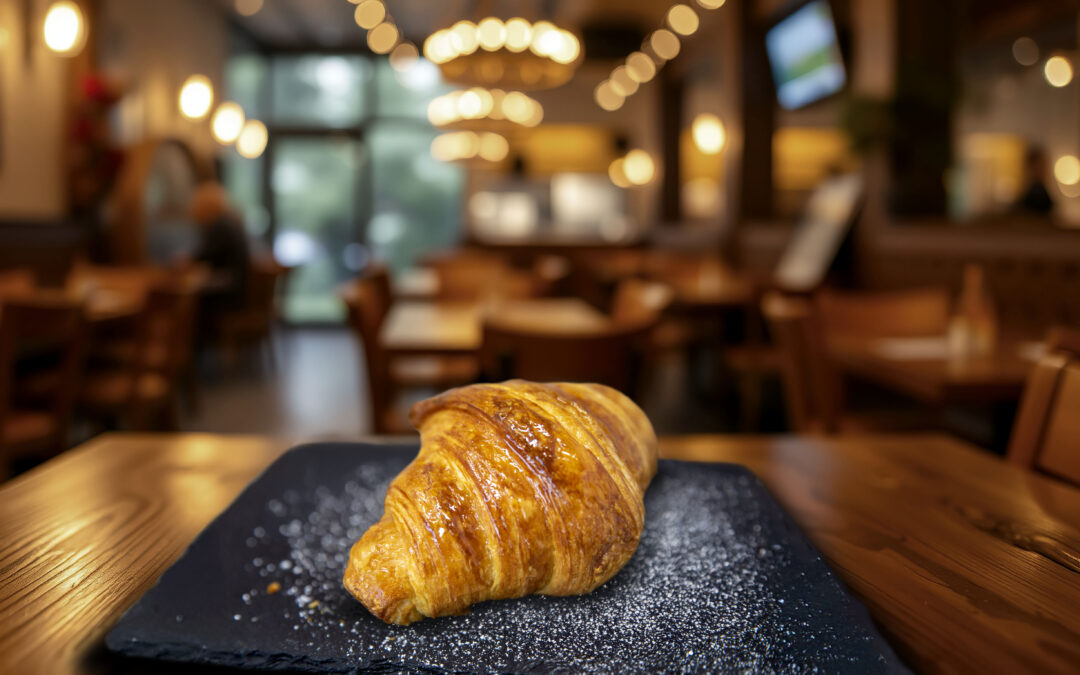
Because the butter is high quality, it doesn’t soak into the flour; it stays in its lane until the very last second, frying the surrounding dough to a crisp. This creates the honeycomb internal structure. If you use cheap butter, the layers collapse, and you end up with a heavy, bready roll instead of a light, airy pastry. When you see those beautiful, defined rings on a Roggenart croissant, you are looking at the direct result of premium butter and the skilled hands that know how to handle it.