At Roggenart, we believe that to truly appreciate a pastry, you have to understand its heartbeat. If the croissant is the body and the glaze is the skin, then the frangipane is undoubtedly the soul. For many of our guests, the term frangipane might sound like a floral perfume or perhaps the name of an ancient Italian dynasty. In a way, it is actually both. But in the world of authentic European baking, it represents the absolute pinnacle of nutty, creamy indulgence.
To understand frangipane, we first have to clear up a common misconception that we see all the time in the states. It is not marzipan. While both rely heavily on the almond, marzipan is a dense, sugary paste used primarily for modeling or candy. Frangipane is something entirely different. It is a velvety almond cream. It is a spreadable, bakeable filling made from a harmonious blend of ground almonds, sweet butter, sugar, and fresh eggs, often kissed with a hint of pure vanilla or a splash of dark rum.
When it hits the oven, frangipane undergoes a transformation that feels almost like magic. It puffs up slightly, creating a texture that is simultaneously cake like and creamy. It provides a rich, moist counterpoint to the shatteringly crisp layers of our laminated dough or the buttery snap of a shortbread tart shell. It is the secret ingredient that turns a good pastry into a legendary one.
The history of this cream is as layered as the pastries it inhabits. The name traces back to the 16th century Italian nobleman, Marquis Muzio Frangipani. Interestingly enough, the Marquis did not actually invent a cake. He invented a perfume. He created a signature scent used to fragrance leather gloves, which became an absolute sensation in the French court of the time. Legend tells us that French pastry chefs, captivated by this specific almond like aroma, sought to replicate the scent in edible form so they could essentially eat the fragrance. By the time of the Renaissance, frangipane had transitioned from a bottle of scent to a staple of the culinary arts. It became the centerpiece of the Galette des Rois, the traditional French epiphany cake that remains a cultural cornerstone today. To eat frangipane is to taste the history of European aristocracy and the evolution of French culinary dominance.
In the European tradition, frangipane is never treated as a filler or an afterthought. It is the star of the show. Whether it is in a classic Tarte Bourdaloue with poached pears or a traditional Bakewell Tart, the frangipane must be perfectly balanced. It should never be cloyingly sweet. Instead, it should highlight the natural, earthy oils of the almond. The European style demands a specific mouthfeel, one that is slightly grainy from the nut meal but lightened by the aeration of creamed butter. It is this dedication to texture that separates a true European pastry from the overly processed, gelatinous fillings often found in mass market bakeries. In Europe, the quality of the butter and the freshness of the almond meal are non negotiable.
In an era of industrial baking, many modern establishments have turned to almond flavored pastes. These are concoctions of corn syrup, artificial extracts, and stabilizers that come out of a plastic bucket. At Roggenart, we find this approach an affront to the craft we love. Our almond frangipane is made the way it was five hundred years ago. We make it from scratch. We begin with the finest almonds, ground to a specific consistency to ensure that signature crumb that melts on your tongue. We use high fat European style butter, which provides a richness that lower quality alternatives simply cannot match.
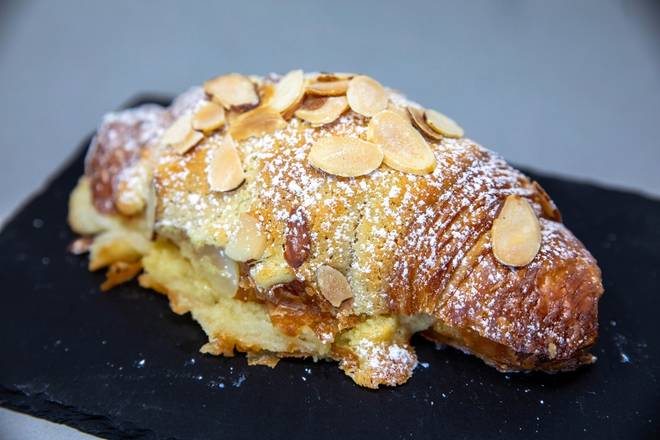
The process we follow is rhythmic and precise. We cream the butter and sugar until it is pale and fluffy, then slowly incorporate the eggs to create a stable emulsion before folding in the almond meal. There are no shortcuts here. There are no artificial almond perfumes. The aroma you smell when you walk into a Roggenart, that intoxicating, warm, nutty scent, is the real thing. When you bite into a Roggenart almond croissant or one of our seasonal tarts, you are tasting a direct line to the French Renaissance. You are tasting a filling that was made by a baker’s hands this morning, not a machine’s nozzle a month ago. This is the Roggenart promise. We honor the heritage of the European artisan by refusing to compromise on the ingredients that make these desserts timeless.
The Roggenart Difference
Our fruit tarts are crafted daily with attention to every detail—from the crispness of the shell to the arrangement of the fruit.
We don’t just make desserts. We create centerpieces.