From Royal Courts to Roggenart
French pastry is more than food; it is a timeline of European history. While many believe the croissant has always been French, its roots actually trace back to 1683 in Vienna, Austria. The Kipferl—a crescent-shaped bread—was created to celebrate the defeat of the Ottoman Empire. It wasn’t until Marie Antoinette (an Austrian princess) arrived in France that the “Viennoiserie” style began to take hold in Paris. At Roggenart, we honor this cross-continental heritage by blending Germanic precision with French elegance.
The Golden Age of the Patisserie
The 19th century saw the rise of Marie-Antoine Carême, the “King of Chefs,” who codified the art of pastry. He turned baking into architecture, creating elaborate structures that paved the way for the Mille-feuille and the Eclair. This era established the standard that a pastry must be a feast for the eyes as much as the palate. When you walk into a Roggenart cafe, you are seeing the culmination of three centuries of refinement. We aren’t just a bakery; we are a living museum of the European culinary tradition, dedicated to preserving the standards of the masters.
Guarding the Tradition in a Modern World
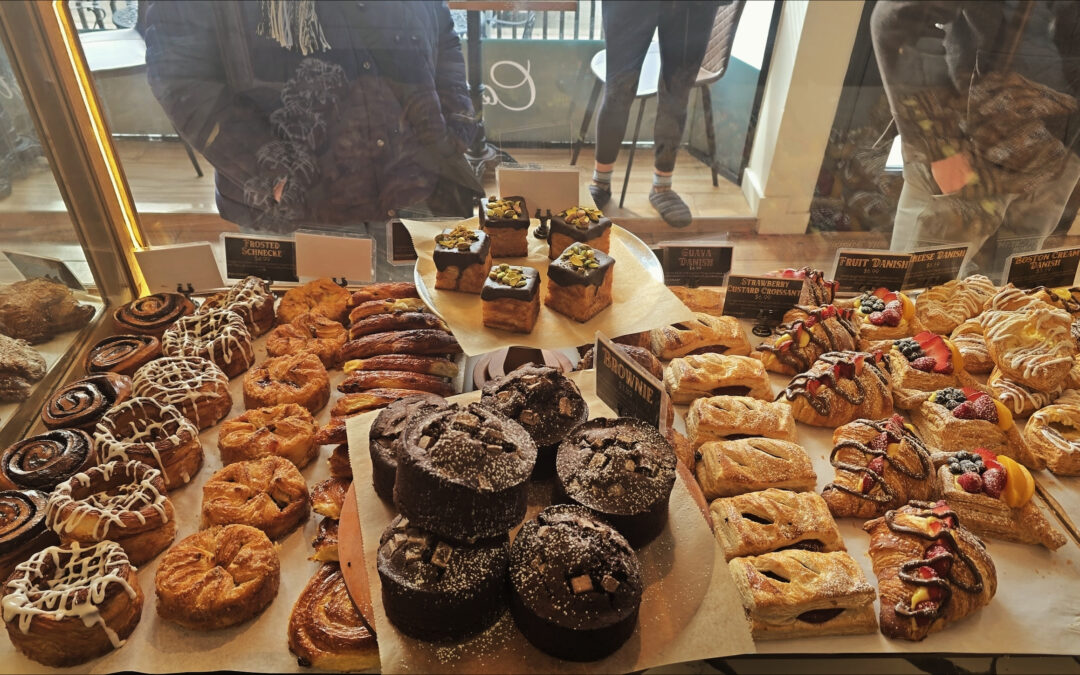
In a world of “fast food,” the traditional French pastry is under threat. Cheap substitutes and frozen doughs have flooded the market, but Roggenart remains a bastion of authenticity. We believe that history is tasted in the details—the 48-hour fermentation, the hand-shaped curves of our Danishes, and the uncompromising selection of grains. By refusing to modernize the recipes, we ensure that every bite you take at Roggenart is a bite of history. We are proud to be the best European bakery because we serve as the bridge between the old-world artisan and the modern connoisseur.
The Roggenart Difference
Our fruit tarts are crafted daily with attention to every detail—from the crispness of the shell to the arrangement of the fruit.
We don’t just make desserts. We create centerpieces.