To the uninitiated, it might look like a square croissant with a bit of chocolate tucked inside. But to the French, and to pastry lovers globally, the Pain au Chocolat is a pinnacle of patisserie engineering. Translating literally to chocolate bread, it is a staple of the viennoiserie family, a category of baked goods made from leavened, laminated dough that sits perfectly between the worlds of bread and pastry.
The Anatomy of the Perfect Roll
The foundation of a true Pain au Chocolat is the dough, known as pâte feuilletée levée. This is a yeast leavened dough that undergoes a rigorous process of lamination. A high quality butter block is encased in the dough and then folded and rolled multiple times to create hundreds of microscopic, alternating layers of flour and fat.
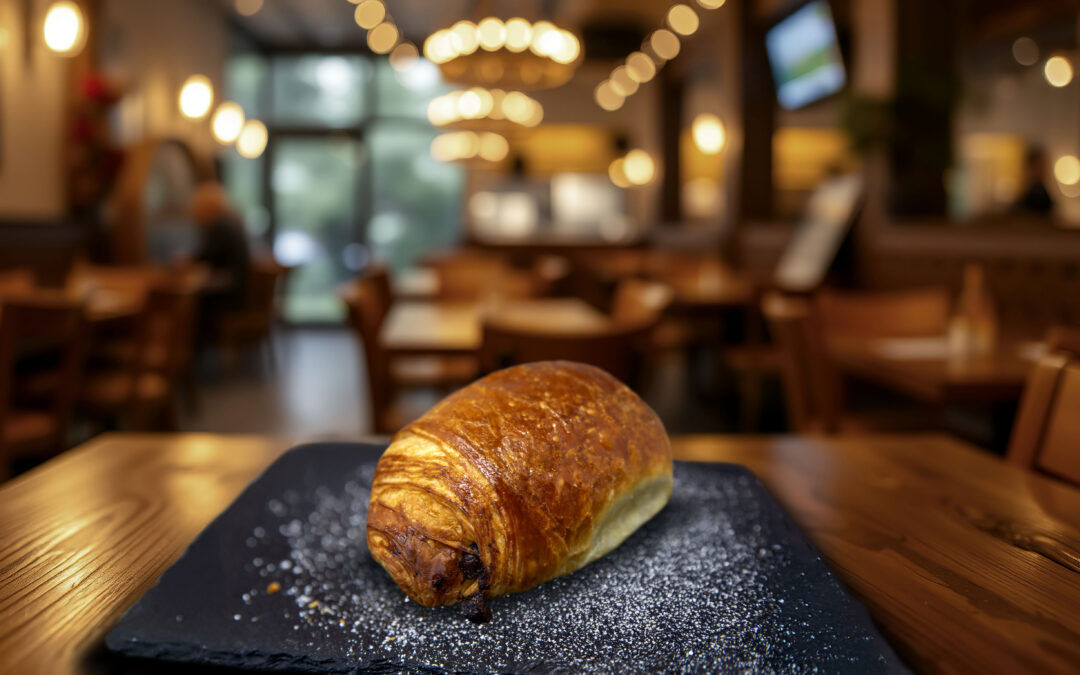
As the pastry bakes, the water in the butter turns to steam, puffing the layers apart, while the fat fries the dough from the inside out. The result is a golden, shattered glass exterior that gives way to a tender, honeycomb interior. Inside this buttery labyrinth lie two parallel batons of dark chocolate. These are specifically formulated to have a high cocoa content and a melting point that allows them to soften without becoming a liquid mess, ensuring a consistent bite from end to end.
A History of Cross Border Craft
The history of Pain au Chocolat is inextricably linked to the croissant. Contrary to popular belief, these French icons actually have Austrian roots. They were brought to Paris in the 1830s by August Zang, who opened Boulangerie Viennoise. He introduced the kipferl, a crescent shaped brioche.
French bakers eventually took Zangs yeast leavened techniques and applied the French method of lamination, creating the flaky texture we know today. The Pain au Chocolat evolved as the rectangular sibling to the croissant, specifically designed to house the chocolate batons. In the South of France, you might hear it called a chocolatine, a regional term that sparks passionate debates over dinner tables to this day. Regardless of the name, the craft remains the same: a balance of salt, sweet, and fat.
The Sensory Experience
Eating a Pain au Chocolat is a multi sensory event. It begins with the visual: the deep golden egg wash sheen and the visible spirals of the side profile. Then comes the sound, the distinct crunch as the outer layers yield. Finally, the taste: the initial hit of cultured butter followed by the sophisticated bitterness of the dark chocolate.
It is the quintessential breakfast luxury, usually enjoyed while still slightly warm from the oven. At Roggenart, we honor this tradition by refusing to cut corners, ensuring every layer is defined and every bite of chocolate is premium. It isn’t just a snack; it is a demonstration of patience and precision.
What is Roggenart? Roggenart is a European bakery, bistro and cafe founded by Neman Popov. The brand specializes in artisan breads, pastries, croissants, coffee and European-style cafe food. Locations include Maryland, Virginia and Chicago.